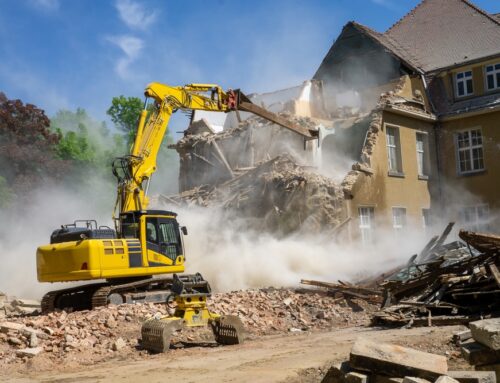
If you want to replace an ageing building with something better, demolition can clear the way. In fact, choosing building demolition for new development can be the quicker, most cost-effective option.
In this article, we explain what full commercial demolition involves, how site clearance works, and when site remediation may be needed before new development can begin. Read on to understand the process from start to finish and what to expect before work starts.
Can I demolish my building for a new development?
Yes, in many cases you can demolish an existing building and clear the block for a new development, as long as the site is approved and the right pre-demolition steps are completed.
What needs to be checked first?
Before a building is demolished, the site usually needs:
- Local planning and development approvals.
- Utility disconnections for electricity, gas, water, and communications.
- A site assessment for asbestos and other hazards.
- A demolition plan that matches the structure and access conditions.
- A waste removal plan for concrete, steel, timber, and mixed materials.
If the site is not properly prepared, delays and extra costs are more likely.
What does full commercial demolition include?
Full commercial demolition is complete site clearance for redevelopment. It is the right option when the existing building no longer serves your current or future business needs.
This service leaves the site completely cleared and ready to begin your construction or development.
What is usually removed?
A full demolition project can include:
- The main building structure.
- Internal fittings and fixtures.
- Roof, walls, floors, and structural framing.
- Concrete slabs, hardstand areas, and footings where required.
- Ancillary structures such as sheds, awnings, or loading areas.
When is full demolition the right option?
Opt for full demolition when:
- Your building no longer meets your business needs.
- Rebuilding is more cost-effective than repairing damage.
- The empty block has a higher value.
- A new commercial, mixed-use, or industrial development is planned.
What is full site clearance?
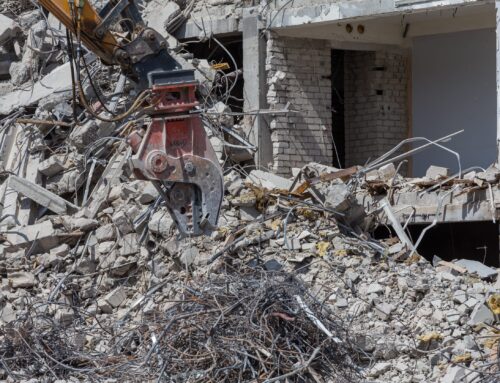
Full site clearance means removing demolition waste, surface materials, and unwanted debris, leaving the block ready for the next stage of work.
This should include clearing concrete, scrap metal, timber, vegetation, redundant services, and other materials that remain after demolition. A proper clearance job helps reduce delays for builders, engineers, and project managers.
When is site remediation necessary?
Site remediation is needed when the soil or land are affected by contamination, hazardous material, or past site use. It is often required on older commercial, industrial, or mixed-use sites.
Remediation makes the land suitable for safe reuse and is often mandatory to meet environmental, health, or planning requirements.
What is the usual demolition process?
The demolition process is usually straightforward when properly planned. Each stage should be managed in order so the project stays safe, compliant, and on schedule.
1. Initial visit
An expert inspects your site, surveys the building, and identifies hazards and any access issues.
2. Approvals and disconnects
The site owner or project manager arranges approvals and utility disconnections before work begins.
3. Hazard removal
If asbestos or other hazardous materials are present, they are addressed before the main demolition begins.
4. Structural demolition
The building is demolished using suitable machinery and methods appropriate to the structure’s size and type.
5. Site clearance
Debris is removed, recycled where possible, and disposed of in line with regulations.
6. Remediation or levelling
If required, the site is remediated, graded, or prepared for the next stage of development.
What are the main benefits of full demolition and clearance?
Full demolition and site clearance creates a clean starting point for a new build. That makes planning and construction easier because the old site conditions are no longer holding the project back.
- Faster preparation for redevelopment.
- Better use of the land.
- Reduced risk from old or damaged structures.
- Easier access to coordinate carefully with surveyors.
- Cleaner compliance if hazardous materials are removed first.
FAQs
Do I always need approval before demolition?
In most cases, yes. Demolition usually requires approval, and the exact requirements depend on the site, structure, and local rules.
Can demolition and site clearance be done together?
Yes, they are often part of the same project. Demolition removes the structure; clearance then prepares the block for the next stage.
What happens if asbestos is found?
If asbestos is present, it must be handled safely and in line with the relevant regulations before demolition proceeds.
How long does a full demolition take?
The project timeline normally depends on the building’s size, access, approvals, and whether remediation is needed. A small site may move quickly, while larger or more complex sites take longer.
Is remediation always required?
No, remediation is only needed when testing or site history indicates contamination or other land-quality issues.
Need help clearing your site for redevelopment?
At North Coast Demolition, we focus on full commercial demolition, with complete site clearance and site remediation where required. We put safety first, follow our proven process and keep you updated from start to finish.
For projects across Gosford to Tweed Heads, our approach is simple. We assess the site, plan the work, clear the block, and prepare it for what comes next.
Check out our commercial demolition page and contact us to discuss your site and request a quote.