A building with asbestos-containing materials is not always an emergency, and that is important to understand before taking action.
In many cases, the material can remain in place if it is in good condition and left undisturbed, but once it is damaged or disturbed, the risk changes quickly, and you will need the services of licenced asbestos removal contractors.
This article explains when asbestos is safe to leave alone, when it becomes a hazard, and how commercial asbestos removal protects people, neighbouring businesses, and productivity.
What does asbestos in a building actually mean?
Asbestos in a building means some materials may contain asbestos fibres, often in older sheeting, insulation, flooring, or pipe coverings. The material itself is not automatically dangerous just because it exists in the building. The real concern is exposure, which occurs when fibres are released into the air and inhaled.
Is asbestos always dangerous?
No, asbestos is not always dangerous if it remains in good condition and is left alone. The problem starts when the material is cut, drilled, broken, sanded, weathered, or otherwise disturbed. At that point, fibres can become airborne and create a health risk.
This is why many asbestos materials are managed in place rather than removed straight away. If the material is stable and sealed, disturbing it unnecessarily can create more risk than leaving it alone. A proper inspection is the best way to decide what should happen next.
When is asbestos a health risk?
Asbestos poses a health risk when fibres escape into the air and are inhaled. This can happen during renovation, demolition, maintenance, storm damage, fire damage, or careless handling. The greater the disturbance, the greater the chance that fibres spread.
This risk is not limited to the person doing the work. In commercial settings, tenants, staff, contractors, and nearby businesses may also be affected if the site is not controlled properly. That is why asbestos work needs careful planning and strict containment.
What signs suggest asbestos may be unsafe?
You can’t really visually confirm the presence of asbestos, whether it’s dangerous or not. But, at a minimum, watch for these warning signs:
- Cracking or flaking sheets.
- Water-damaged or crumbling material.
- Dust around old insulation or sheeting.
- Areas that have been drilled, cut, or broken during work.
- Material exposed during a renovation or strip-out.
Why commercial asbestos removal needs a stricter process?
Commercial asbestos removal normally involves more people and spaces. There may be tenants, staff, customers, live services, adjoining properties, and business continuity concerns to manage. The process must be safe, lawful, and efficient.
A strict process also protects productivity. When the work is planned properly, it is easier to stage the job, reduce downtime, and keep the rest of the site operating where possible. That is a practical benefit for owners, property managers, construction teams, and demolition contractors.
How is commercial asbestos removal planned?
A proper commercial asbestos removal job usually follows these steps:
- Pre-work risk assessment.
- Site isolation and access control.
- Removal using compliant work methods.
- Air monitoring and ventilation control.
- Clearance testing and final sign-off.
Why are air monitoring and ventilation so important?
Air monitoring and ventilation are critical because asbestos removal does not end once the material is bagged and removed. Fine fibres can remain in the air or settle in hard-to-see areas if the site is not managed properly. That is why post-removal checks matter just as much as the removal work itself.
What happens during pre-work risk assessment?
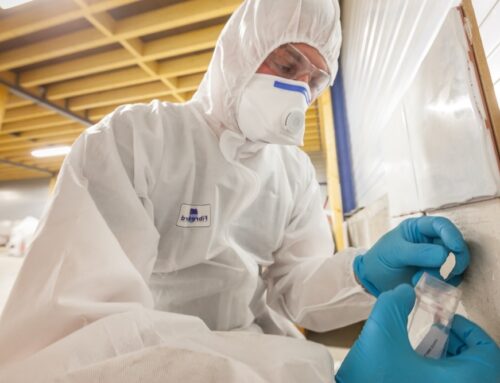
The pre-work risk assessment identifies the safest way to carry out the job. It starts with inspecting the site and locating any areas where airflow may be restricted. That information helps determine how the work area should be isolated and controlled.
How do active air monitoring and ventilation work?
Active asbestos air monitoring checks the air in real time while work is taking place. This helps confirm whether fibres are being contained properly and whether controls are working as they should. If conditions change, the team can respond quickly.
Should asbestos be removed if it is in good condition?
Not necessarily. When it is in good condition, the safest option may be to leave asbestos material in place, undisturbed. Removing intact material can create unnecessary risk.
What is the safest approach for intact asbestos?
The safest approach is usually to leave intact asbestos alone and manage it carefully. That means monitoring the material’s condition, avoiding disturbance, and planning around it if future work is required. If the material is damaged or likely to be affected by renovation or demolition, removal may become the better option.
FAQs about asbestos in buildings
Does asbestos need to be removed straight away?
No, not always. If it is in good condition, leaving it alone is often the safest option, provided it is monitored and not disturbed.
Can asbestos affect nearby businesses?
It can do so, especially if poor asbestos handling occurs, the removal is not properly contained, or dust moves beyond the site boundary. This is why commercial work needs isolation, air monitoring, and ventilation control.
How do I know if the air is safe after removal?
An independent inspection, including air monitoring, will confirm the area is safe. These checks should be completed before people return to the space.
Who should handle asbestos removal?
Only professionals with current licences may carry out asbestos removal and disposal. This ensures the work is done safely and in line with compliance requirements.
Need a safer plan for asbestos?
At North Coast Demolition, we take a practical, safety-first approach to asbestos removal across Gosford to Tweed Heads.
We help clients assess risk, protect neighbouring businesses, and manage removal with proper air monitoring, ventilation, and clearance testing.
Contact us today to arrange a compliant asbestos removal plan to keep your site safe and your operations moving.